
Helen tests … polishing methods.
Working with polymer clay means you end up not only sanding a lot, but also polishing to give the pieces a nice sheen. I often don’t polish and instead use varnish, especially when working with Mica powder, which requires varnish. However as varnish is a bit messy and mainly reserved for designs with Mica I have started polishing. My first attempt at a polishing method using my Dremel tool with a buffing wheel has ended up in dents – mainly because I wasn’t careful enough (even the lowest speed on the Dremel is pretty fast and you should only touch the wheel lightly with the item you’re trying to polish) but also because I used the wrong buffing wheel – felt – which is far too coarse for polymer clay.
Frustrated I asked on the BPCG’s Facebook page for advice and started a long discussion about not only the best use of the Dremel, but also alternatives. One member advised me to make my own Dremel buffing wheel out of denim, as it works well as a polishing cloth ( you can even see the difference when you are just using it without a Dremel).
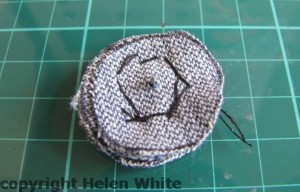
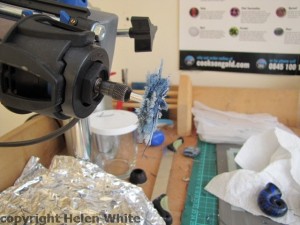
Following the instructions on FloRaeMe’s blog I made my own wheel.
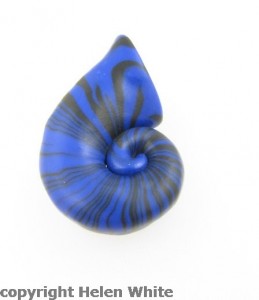
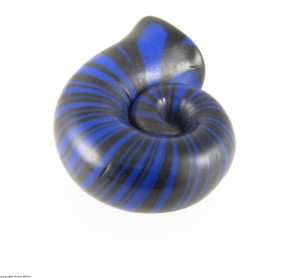
I polished two of my nautili which unfortunately got slightly spiked in my oven, so they serve as test pieces. The result it pretty good. I use Fimo and was told that you get a higher sheen with Kato clay. I haven’t used Kato so can’t really comment on it.
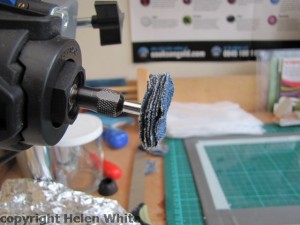
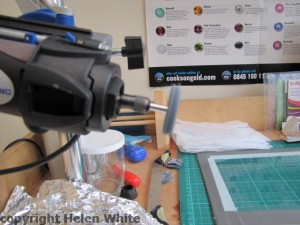
The downside to using the Dremel with denim is that it frays very quickly and is incredibly messy. The fibres are flying everywhere. And it’s also noisy and requires a steady hand. You really have to make sure you are only lightly touching the wheel. I was recommended to use muslin instead of denim but don’t really know where to get it from (so if you can recommend a supplier let me know).
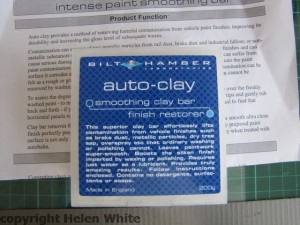
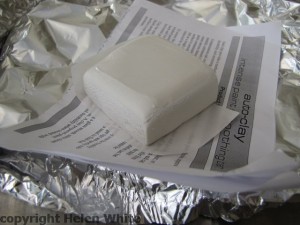
Another member recommended a polishing compound normally intended for cars. It’s called “auto-clay” and supposed to clean the car surface, getting rid of dust, dry tree sap and other things that normal washing can’t .The stuff is detergent-free, has no soaps or surfactants and is a product that’s actually made in England (rare these days). It’s really easy to use. Just cut off a small amount to use on the piece you want to polish, sprinkle it with a bit of water to lubricate it and rub it firmly over the whole piece. Use a cloth to give it a polish.
The result is a subtle sheen, plus the stuff does lift off dust and dirt, which might have been missed out otherwise.
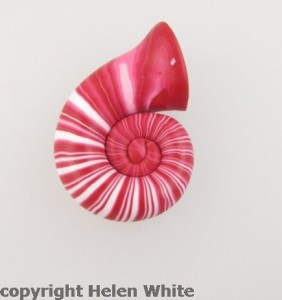
What I like about it is that it’s safe and easy to use, however it doesn’t provide you with the ultimate shine.
The final product I have tested for polishing is the versatile Renaissance Wax. It’s also a product made in England, smells like shoe polish and is used by museums all over the world to preserve paintings. You can use it with all sorts of surfaces: marble, string instruments, leather, wood, metal and polymer clay.
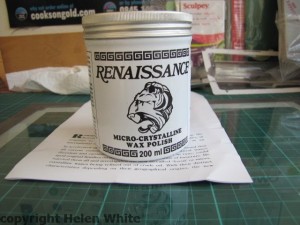

It’s super easy to use – just dab a soft cloth in the pot for a tiny amount, rub it in and polish it. For extra shine you could of course use the Dremel again.

As it does smell a lot I recommend only using it in a well – ventilated room.
I love Renaissance Wax and intend to use it a lot – It’s economical to use and also gives the polymer clay designs extra protection.
I would love to hear from you and your polishing experiments.
Update:
Since I have posted this review I have actually bought a small soft polishing mop and a multi-chuck for my Dremel to fit it. It works much better than the denim wheel (not as messy and no danger of turning items blue!). I have a few things now to polish with it and have to see how long this wheel lasts for. Will keep you posted.
August 17, 2012 @ 12:59 pm
A really interesting post. I don’t use polymer clay but its nice to see other people doing little experiments and trials on their jewellery.
Thanks for sharing Siân :0)
August 20, 2012 @ 11:41 am
Thanks for commenting Sian. Looks like you specialise in Venetian glass and also support UK Handmade:)